The internet solved access.
It did not solve learning.
Today, almost anyone can access:
- videos
- courses
- articles
- tutorials
- AI-generated explanations
Information has never been more available.
But learning is still difficult.
Access was never the final goal
For years, education focused on one major problem:
👉 access to information
The internet changed that completely.
Now:
- knowledge is searchable
- courses are everywhere
- lectures are free
- AI can explain almost anything instantly
The barrier to information collapsed.
But something important became clear:
👉 access to content does not automatically create learning.
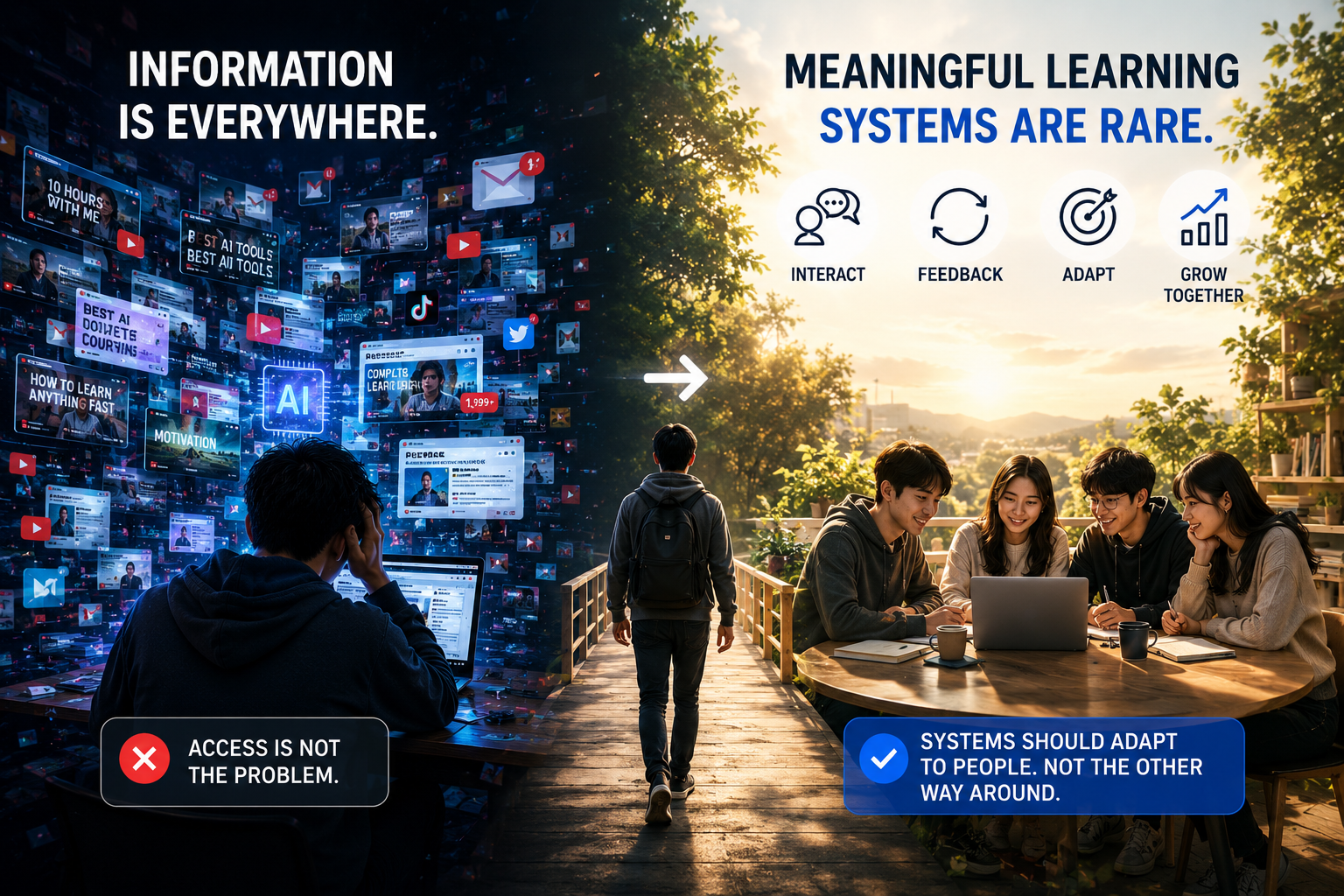
Information is infinite
The modern learner is surrounded by endless content.
At any moment, people can open:
- YouTube
- online courses
- blogs
- podcasts
- AI tools
The problem is no longer scarcity.
It’s overload.
People consume more information than ever —
but often retain very little.
Because consuming information is not the same as understanding it.
Learning requires more than content
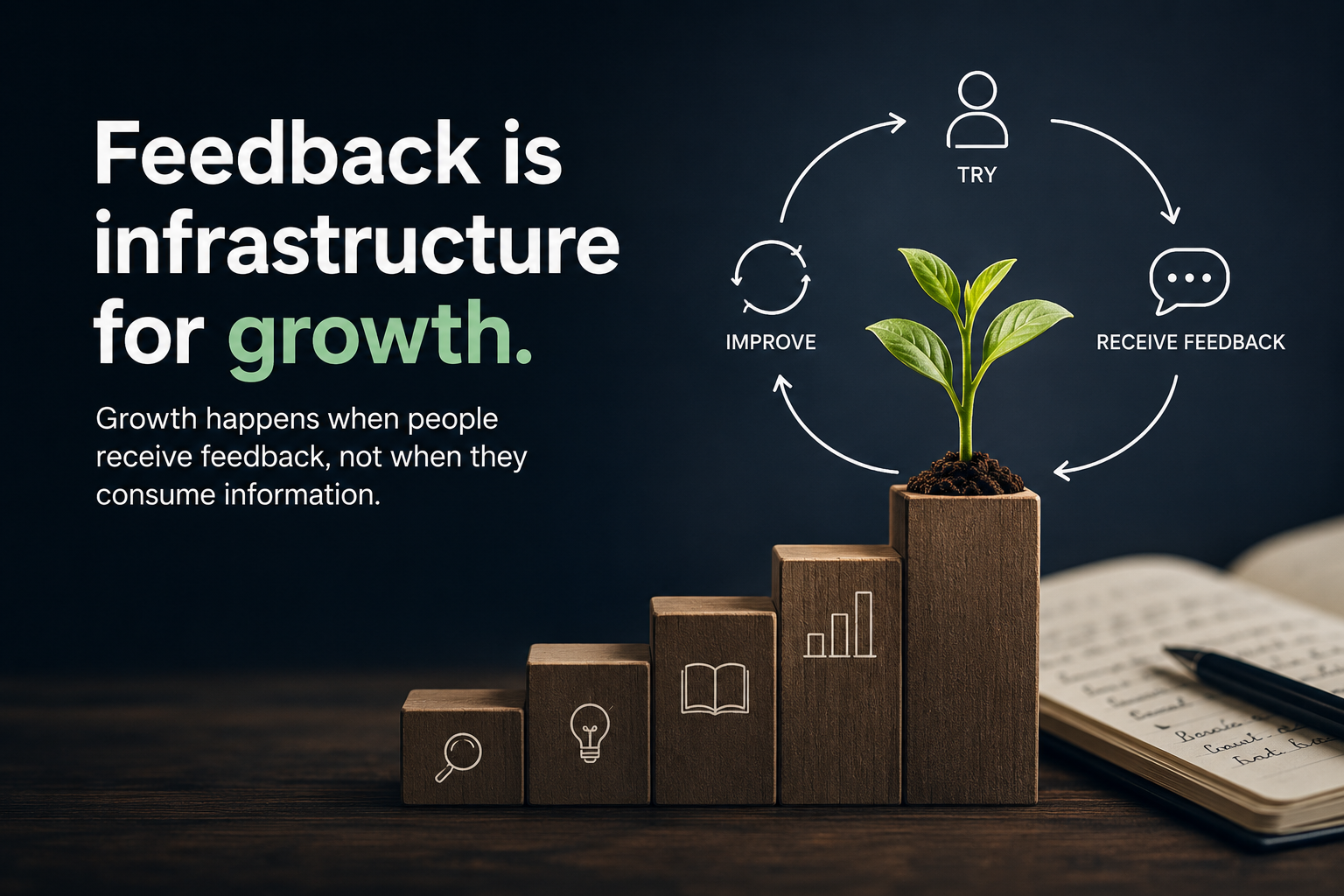
Real learning happens through:
- interaction
- feedback
- repetition
- experimentation
- discussion
Not passive consumption.
People learn when they:
- ask questions
- make mistakes
- receive guidance
- apply knowledge
- improve over time
Learning is an active process.
Not a feed.
The missing layer
Most platforms optimize for:
- delivering content
- increasing watch time
- maximizing engagement metrics
But very few optimize for:
👉 actual understanding
A meaningful learning system should help people:
- stay motivated
- interact consistently
- receive feedback
- collaborate with others
- grow through iteration
Without this layer, information becomes noise.
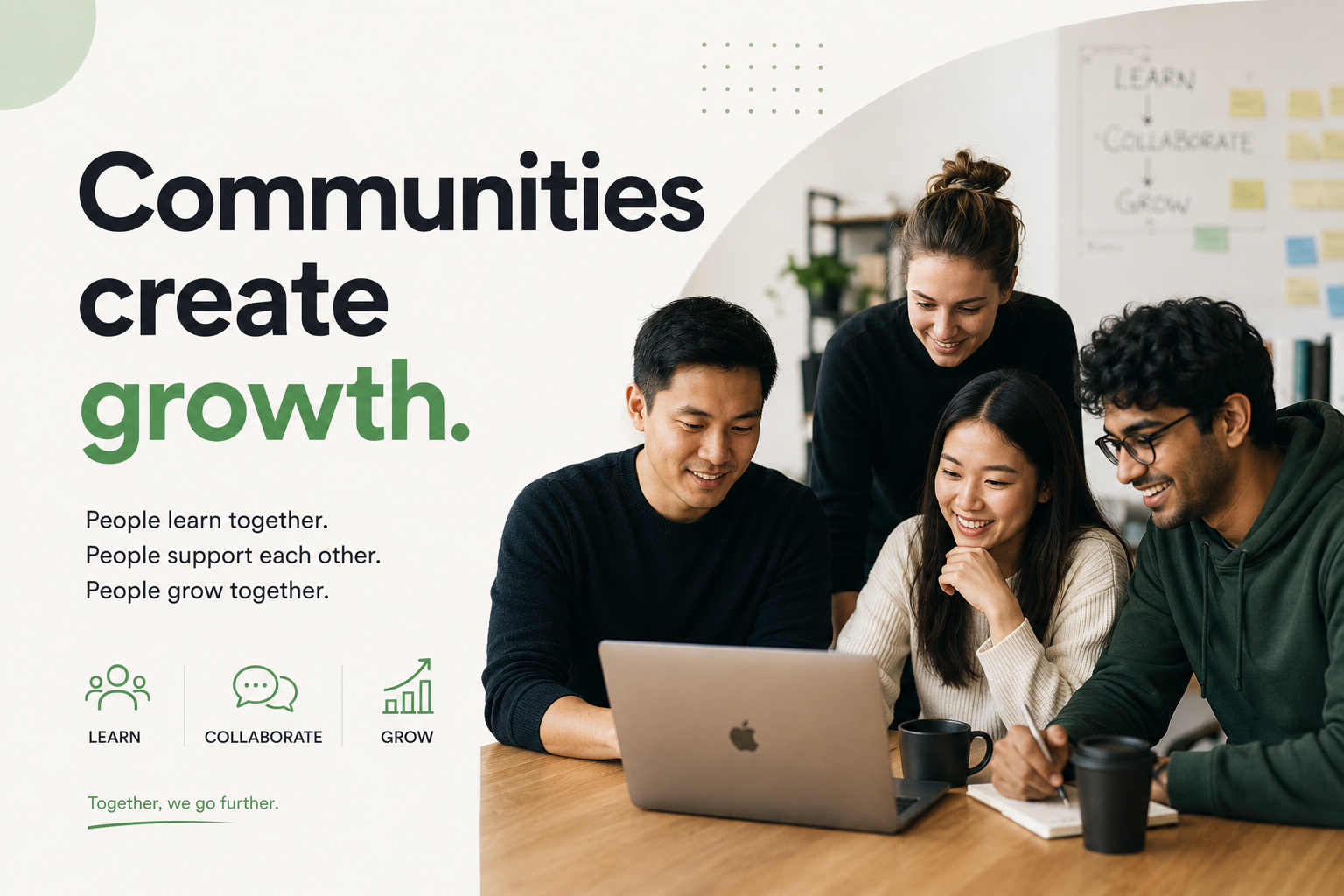
Learning is social
One of the biggest misconceptions about online education is the idea that learning is purely individual.
But humans learn better together.
Through:
- conversation
- collaboration
- accountability
- shared experiences
Learning becomes more meaningful when people feel connected.
The internet gave us access to information.
The next step is building environments where people can learn together.
AI changes the opportunity
AI makes information even easier to access.
But its real potential is not infinite content generation.
It’s creating adaptive learning systems.
Systems that can:
- personalize feedback
- understand progress
- identify struggles
- support different learning paths
AI should not just generate information.
It should help create better learning experiences.
What I’m building
At Hischool, we are exploring:
- collaborative learning systems
- group-based learning environments
- interaction-driven education
- systems where people learn together
Not just platforms filled with content.
But environments where learning happens naturally.
At Gradelytic, we are building:
- feedback-driven assessment systems
- AI-powered evaluation workflows
- tools that help teachers understand learning
- systems designed around growth and progress
Not just gradebooks.
But systems that make learning more meaningful.
Final thought
The internet solved access to information.
But education is not a distribution problem anymore.
The challenge now is building systems where people:
- understand deeply
- stay motivated
- receive feedback
- grow together
Because information alone does not create learning.
👉 Meaningful systems do.